Solar Basics
A rooftop solar system converts sunlight into electricity that your home or facility uses first, with the surplus exported to the grid through a net meter. Understanding the basics helps you judge a proposal on merit instead of on price alone.
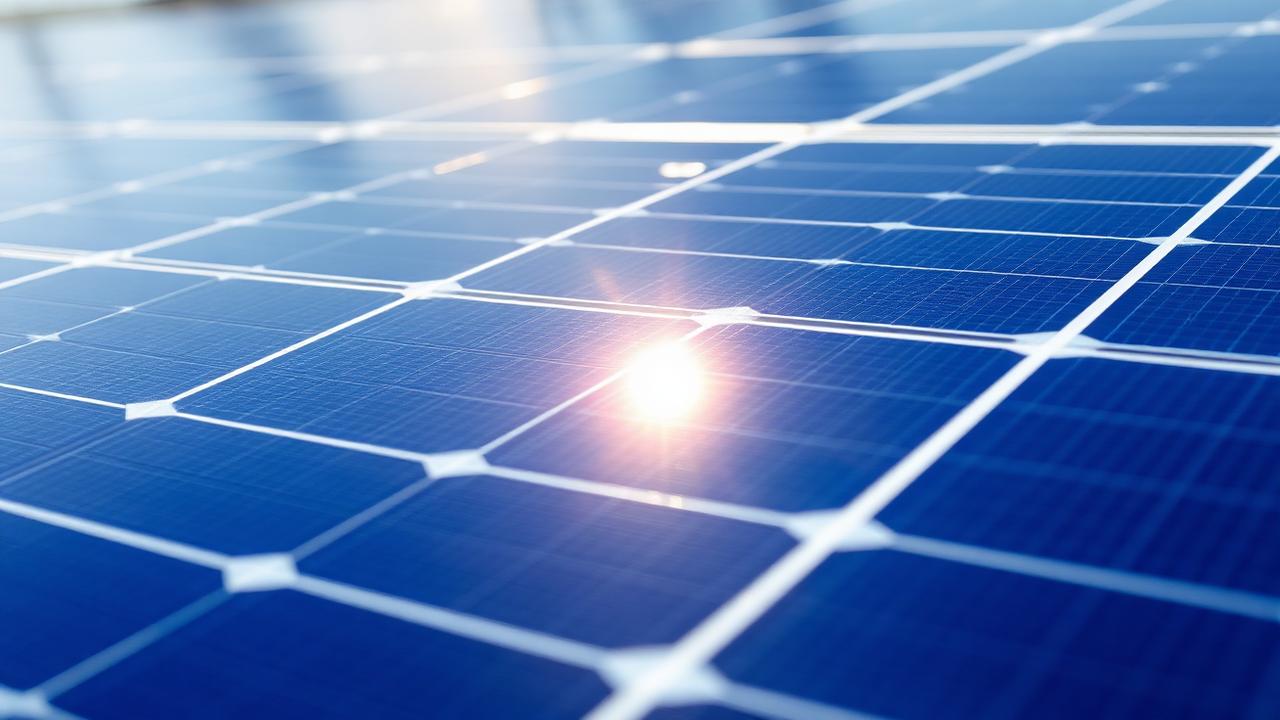
How sunlight becomes usable electricity
Solar cells in a photovoltaic module generate direct current (DC) when sunlight falls on them. The modules are wired into strings, routed through DC protection, and fed into an inverter that converts DC into alternating current (AC) at the same voltage and frequency as your existing supply. That AC power joins your distribution board and is consumed by whatever is running at that moment — lights, pumps, air conditioning, machinery. Nothing about how your appliances work changes.
The main components
Every grid-connected system, from 1 kW to 1 MW, uses the same building blocks. Quality differences between proposals usually sit in the components most people never ask about.
- Modules: Mono PERC or TOPCon panels, typically 540–620 Wp each, ALMM-listed for subsidy and DISCOM approval.
- Mounting structure: Hot-dip galvanised or aluminium structure designed for local wind loading, with correct tilt for Gujarat's latitude.
- String combiner and DCDB: Fusing, isolation and surge protection on the DC side.
- Inverter: String or hybrid, sized to the array, with built-in monitoring.
- ACDB and earthing: AC protection, lightning arrestor and a proper earthing pit set.
- Net meter: A bidirectional DISCOM meter that records both import and export.
How much a system generates
In Gujarat, a well-installed rooftop system generates roughly 4 units per kW per day averaged over the year — about 120 units per kW per month, or 1,400–1,500 units per kW per year. A 5 kW system therefore produces around 600 units a month on average. Summer months run higher, monsoon months lower. Shading, dust, module temperature and cable losses all shave a few percent off the theoretical figure, which is why a shadow-free layout matters more than a marginally higher panel wattage.
Sizing a system to your bill
System size should follow consumption, not roof size or budget alone. Take your average monthly units from the last twelve bills and divide by 120 to get an approximate kW requirement. A home consuming 600 units a month needs about 5 kW. Then check two constraints: shadow-free roof area (roughly 8 sq. m. per kW) and your sanctioned load, since most DISCOMs do not permit a solar capacity far above it without a load enhancement.
Net metering explained simply
Your solar generation is consumed on site first. When generation exceeds consumption, the surplus flows out to the grid and the net meter records it as export. When generation is low — at night, or on a cloudy day — you draw from the grid as usual. Your bill is settled on the net of the two, and unused export credits are typically carried forward within the settlement period defined by your DISCOM.
On-grid, off-grid and hybrid
On-grid systems have no battery, cost the least per kW, and stop during a grid outage for safety reasons. Off-grid systems run entirely on batteries and are only sensible where there is no reliable supply. Hybrid systems add a battery to an on-grid design so selected essential loads keep running during an outage. For most urban Gujarat rooftops, on-grid is the right economic answer; hybrid is worth it only when backup genuinely matters to you.
Frequently asked questions

Ready to plan your solar system?
Talk to our team about your consumption, your roof and your goals. No obligation — just a clear assessment of what makes sense for you.